

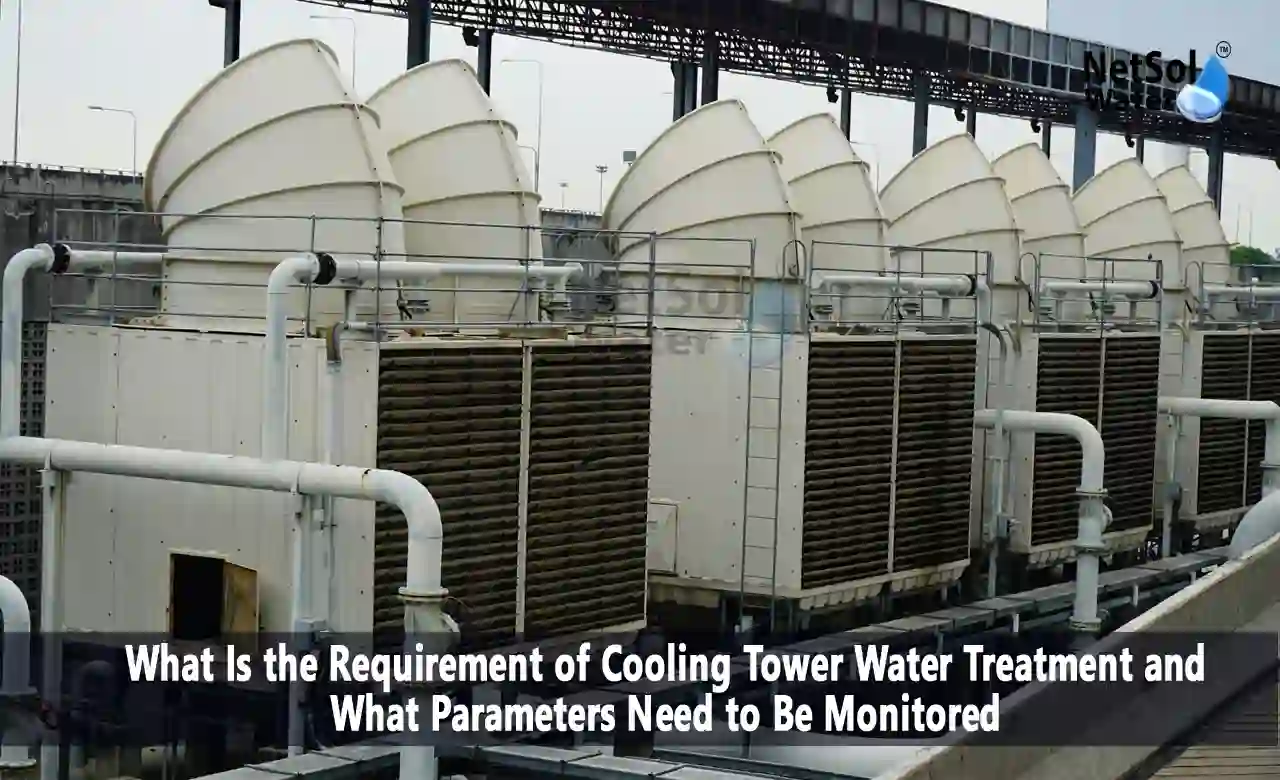
Cooling Tower Water Treatment Requirements & Parameters
If you run a cooling tower, you already know it needs water to work. But here is something most people do not think about. The quality of that water changes every single day as the tower runs. And if you do not manage those changes properly, your equipment starts paying the price quietly in the background.
Scale builds up. Pipes start corroding. Bacteria start growing. And your electricity bill goes up because your system is working harder than it should be.
This page explains cooling tower water treatment. What it is, why it matters, what parameters you need to watch and what happens when things go wrong. Cooling tower water treatment depends on proper makeup water quality, which can be improved using industrial RO plants and water softening systems.
What Does Cooling Tower Water Treatment Actually Mean?
Simply put, cooling tower water treatment is the process of keeping your circulating water in good condition so it does not damage your equipment or waste your resources.
Here is what happens inside a running cooling tower. Water evaporates to carry heat away. That is the whole point of the tower. But when water evaporates, everything that was dissolved in it stays behind. Minerals, salts, chemicals, all of it concentrates in the water that remains. The longer the tower runs without treatment, the more concentrated that water becomes.
Left unchecked, this leads to three problems that every cooling tower operator eventually faces.
Scale deposits form on your heat exchanger surfaces and pipes. Corrosion eats through your metal components slowly. Bacteria and biofilm start growing in the warm water environment.
Good water treatment stops all three from happening by controlling what enters the system, what builds up inside it, and what gets removed through regular blowdown.
Why You Cannot Skip Water Treatment?
Let us be honest about what actually happens at facilities that do not treat their cooling tower water properly. These are not worst case scenarios. They are common outcomes that show up at industrial sites across India regularly.
1: Scaling Costs You Money on Your Electricity Bill
Scale is a hard mineral deposit that forms on heat exchanger surfaces and inside pipes. Even a thin layer of just 1.5 mm reduces heat transfer efficiency by up to 15 percent. A 6 mm deposit pushes that loss to 40 percent or more.
What this means in practice is simple. Your chiller has to run harder and longer to achieve the same cooling. Your electricity consumption goes up. And this extra cost shows up on your bill every single month without you necessarily connecting it back to the scale problem inside your cooling system.
2: Corrosion Destroys Components You Cannot Easily Replace
Water that is too acidic or chemically unbalanced slowly attacks the metals in your cooling circuit. Pipes develop leaks. Heat exchanger tubes thin out and eventually fail. Cooling tower basins corrode through.
The frustrating thing about corrosion is that by the time you notice it, significant damage has already happened. Replacing corroded components is expensive and time consuming. Preventing corrosion through proper water treatment is far cheaper and far less disruptive.
3: Bacteria Growth Is a Real Health Risk
Warm circulating water is an ideal environment for bacteria to thrive. The most dangerous one associated with cooling towers is Legionella pneumophila, which causes Legionnaires disease, a serious form of pneumonia.
Legionella outbreaks linked to poorly maintained cooling towers have caused deaths in documented cases around the world. This is not something to take lightly. Proper biocide treatment and regular monitoring are a basic responsibility for anyone operating a cooling tower near occupied buildings or in healthcare settings.
4: Untreated Water Wastes More Water Than You Realize
Without proper treatment and managed blowdown, cooling towers drain away far more water than they actually need to. Good treatment allows you to get more use out of each litre of water before it needs to be replaced. Over a year, the difference in water consumption between a treated and an untreated cooling tower is significant enough to matter both financially and environmentally.
The Four Things Every Cooling Tower Treatment Program Must Address
Think of cooling tower water treatment as having four jobs it needs to do simultaneously. A good program handles all four. A weak program misses one or more and problems follow.
1: Controlling Scale
The treatment program needs to stop minerals like calcium, magnesium, and silica from depositing on your heat exchange surfaces. This happens through a combination of softening the makeup water before it enters the system, running at a sensible cycles of concentration level, and adding scale inhibitor chemicals to the circulating water on a continuous basis.
2: Controlling Corrosion
The water chemistry needs to stay within a range that does not attack the metals in your system. Different metals need different approaches. Mild steel, copper, galvanized steel, and stainless steel all have different sensitivities. Corrosion inhibitors are selected based on what metals are actually present in your specific cooling circuit.
3: Controlling Biological Growth
Bacteria and biofilm need to be kept in check through regular biocide dosing and periodic shock treatments. Waiting until you can see algae growing in your tower basin means the biological problem has already become serious. Good treatment programs stay ahead of biological growth rather than reacting to it after the fact.
4: Managing Blowdown Properly
Blowdown is the deliberate draining of a portion of your concentrated circulating water to dilute the mineral buildup. Managing blowdown correctly keeps your dissolved solids at a safe level without wasting more water than necessary. This is where cycles of concentration management becomes important.
Understanding Cycles of Concentration
This is one concept that makes a real practical difference once you understand it properly.
Cycles of Concentration is the ratio of dissolved solids in your circulating water compared to dissolved solids in your makeup water.
Here is a simple example. If your makeup water has a conductivity of 400 microsiemens per centimeter and your circulating water reads 1600 microsiemens per centimeter, you are running at 4 Cycles of Concentration.
Why does this matter? Because it directly controls how much water you waste through blowdown.
At 2 Cycles you are draining roughly half your makeup water as blowdown before reusing it. At 4 Cycles that blowdown drops to about 25 percent of makeup water. At 6 Cycles it drops to around 17 percent.
Running at higher cycles of concentration saves a lot of water. But pushing cycles too high without proper treatment causes rapid scaling and corrosion. Finding the right cycles of concentration for your specific water quality is one of the most valuable things a good water treatment program does for you.
The Parameters You Need to Monitor and Control
This is the most practical section of this page. These are the actual numbers you need to track in your cooling tower water. Each one tells you something specific about what is happening inside your system.
1: pH
pH tells you how acidic or alkaline your water is. The target range for cooling tower circulating water is generally 7.0 to 8.5.
Too acidic and your metals corrode quickly. Too alkaline and carbonate scale forms rapidly. Test pH daily and use acid dosing or alkalinity adjustment to keep it within range. It is one of the easiest parameters to control once you have a proper dosing system in place.
2: Total Dissolved Solids
TDS measures all the dissolved salts and minerals in your water in milligrams per litre. As water evaporates, TDS rises. For most cooling tower systems the circulating water TDS should stay below 2000 to 3000 ppm. Above this level scaling and corrosion risk both go up sharply and you need to increase your blowdown rate to compensate.
3: Conductivity
Conductivity is closely linked to TDS and is measured in microsiemens per centimeter. It is easy to measure continuously with automated sensors and most modern cooling tower controllers use it to trigger automatic blowdown when the level climbs too high. A typical target range is 1000 to 3000 microsiemens per centimeter depending on your makeup water quality and treatment chemicals.
4: Total Hardness
Hardness comes from dissolved calcium and magnesium. High hardness is the main reason carbonate scale forms in cooling systems. Keep total hardness below 500 ppm as CaCO3. If your makeup water is naturally very hard, a softening system upstream of the cooling tower is often the most practical solution.
5: Calcium Hardness
Calcium hardness specifically matters because calcium carbonate is the most common scaling compound in cooling systems. Keep it below 300 to 400 ppm as CaCO3. Higher calcium levels mean you either need to run at lower cycles of concentration or use stronger scale inhibitor dosing to prevent deposits from forming.
6: M Alkalinity
Alkalinity measures how well your water resists pH changes. High alkalinity combined with high calcium hardness is a recipe for carbonate scaling. The target range for M alkalinity is typically 100 to 500 ppm as CaCO3. When it climbs above this range, acid dosing brings it back down.
7: Silica
Silica deserves special attention because silica scale is extremely difficult to remove once it forms. Unlike carbonate scale which sometimes responds to acid cleaning, silica deposits are very hard and stubborn. Keep silica in your circulating water below 150 ppm. In many parts of India where groundwater naturally carries high silica levels, this requires careful management of cycles of concentration and specific silica control chemicals in your treatment program.
8: Chlorides
Chlorides speed up corrosion throughout your cooling circuit, especially in stainless steel components. Keep chloride levels below 250 ppm. If your makeup water source has naturally high chloride content, this needs to be factored into your makeup water treatment design from the beginning.
9: Sulfates
Sulfates contribute to corrosion and can participate in scale formation. Keep sulfates below 400 ppm in your circulating water. If you use sulfuric acid for pH control, monitor sulfate levels carefully because each dosing event adds sulfate to the system.
10: Iron
Dissolved iron in your cooling water is a warning sign. It tells you corrosion is actively happening somewhere in the system. Iron also contributes to fouling deposits and encourages biological growth. Keep iron below 1 ppm. When you see elevated iron levels, the right response is to find out where the corrosion is happening, not just to add more corrosion inhibitor without investigating the source.
11: Total Bacteria Count
Biological contamination is measured in colony forming units per milliliter. Your cooling tower circulating water should stay below 10000 CFU per mL in normal operation. Legionella specific testing is also recommended, especially for towers near occupied buildings or in healthcare settings. Biocide dosing on a regular schedule and periodic shock treatments keep bacterial counts under control.
12: Turbidity
Turbidity measures how cloudy your water looks due to suspended particles, expressed in NTU. Keep your cooling tower water below 5 NTU. High turbidity means solids are accumulating in the system and creating conditions for fouling and biological growth. Side stream filtration is one of the most effective ways to keep turbidity consistently low without relying entirely on blowdown.
13: Free Chlorine Residual
When you use chlorine based biocides, maintain free chlorine residual between 0.2 and 0.5 ppm. Below this range biological control becomes inadequate. Above it, chlorine starts corroding metals and degrading other treatment chemicals in the system.
14: Langelier Saturation Index
LSI is a calculated number that tells you whether your water is trending toward scaling or toward corrosion. It uses pH, temperature, TDS, calcium hardness, and alkalinity together in a single calculation.
Zero means balanced. Above plus 0.5 means significant scaling tendency. Below minus 0.5 means corrosive tendency. The sweet spot for cooling tower water is between plus 0.1 and plus 0.3, which is mildly scale-forming enough to offer some corrosion protection without causing problematic deposits on surfaces.
How Often Should You Test These Parameters?
Here is a practical testing schedule that works for most industrial and commercial cooling tower operations in India.
. Every day test pH, conductivity, and free chlorine or biocide residual. Also do a quick visual check of the basin for clarity and any obvious biological growth.
. Every week test TDS, total hardness, calcium hardness, M alkalinity, turbidity, and iron.
. Every month test silica, chlorides, sulfates, and total bacteria count. Also calculate your full LSI using all the measured parameters together.
. Every quarter carry out Legionella specific testing, inspect corrosion coupons placed inside the system, and do deposit analysis if you are seeing any scale formation.
. Every year do a full mechanical inspection of the tower structure, assess heat exchanger tube condition, review fill media condition, and go through the full year of testing data to evaluate whether your treatment program is working as intended.
Automated online monitoring systems that continuously track pH, conductivity, and ORP make a big practical difference in large cooling systems. They trigger automatic dosing and blowdown when parameters drift out of range, which means problems get caught before they develop into serious issues rather than between manual testing intervals.
What to Do When Parameters Go Out of Range?
Here is a simple practical reference for what different readings mean and what action to take.
. High TDS or conductivity means increase your blowdown frequency and check if your makeup water quality has recently changed.
. High pH means increase acid dosing and check the alkalinity of your incoming makeup water.
. Low pH means reduce acid dosing and investigate whether there is contamination or unusual CO2 entering the system.
. High calcium or total hardness means check your softener performance and consider temporarily reducing your cycles of concentration.
. High silica means reduce your cycles of concentration immediately and review your silica inhibitor dosing alongside your makeup water silica levels.
. High bacteria count means increase biocide dosing right away, do a shock treatment, and physically inspect the basin and fill media for visible biofilm.
. High iron means find the source of corrosion, review your corrosion inhibitor dosing, and check whether pH has been staying consistently within range.
. High turbidity means inspect your filters, increase blowdown, and check if any recent maintenance or disturbance has introduced solids into the system.
Finding these issues through regular testing and acting quickly is always far cheaper than dealing with the equipment damage or health consequences of letting parameters drift for weeks or months.
Why Your Makeup Water Quality Shapes Everything Else?
One point that many facility managers miss is that what comes into the cooling tower determines how hard your treatment program has to work. Poor quality makeup water means more chemical dosing, more frequent blowdown, and higher risk of problems even with a well designed treatment program running.
Investing in a good industrial RO plant or water softener for makeup water treatment is not an extra cost. It is what allows your cooling tower to run at higher cycles of concentration safely, use less total water, and need less chemical treatment to stay balanced.
Source water across India varies enormously. Water in Noida, Chennai, Hyderabad, Pune, and Surat all have different TDS levels, hardness profiles, silica concentrations, and biological characteristics. A treatment program designed around one city's water will not automatically work for another. This is exactly why makeup water treatment needs to be designed specifically around a proper analysis of your actual source water.
Side Stream Filtration: Simple and Highly Effective
Most cooling tower treatment programs focus on chemical dosing and blowdown. Side stream filtration is often left out of the picture even though it is one of the most consistently effective tools available.
A side stream filtration system takes a small portion of your circulating cooling water, typically 1 to 5 percent of the total flow, passes it through a sand or multimedia filter, and returns it clean to the system. Running continuously throughout the day, this keeps suspended solids and turbidity low without depending entirely on blowdown to remove them.
It reduces turbidity continuously. It removes corrosion products and biological debris before they foul your heat exchangers. It extends the life of your fill media. It reduces the blowdown volume needed to control turbidity. And it lowers the overall biological load in the system, making your biocide program work more effectively.
For large cooling towers in data centers, hospitals, pharmaceutical plants, and heavy industry, side stream filtration should be considered a standard part of the system rather than an optional extra.
About Netsol Water
We are Netsol Water, an ISO certified water treatment system manufacturer and supplier serving clients all across India. Cooling tower water treatment is one of our core areas of work and we have designed and installed treatment systems for clients in pharmaceuticals, food processing, power generation, chemicals, data centers, and large commercial facilities.
Every project we take on starts with a proper water analysis. We look at your source water quality, your current operating parameters, your cycles of concentration, and your blowdown situation. We then design a complete treatment solution built specifically around what your cooling tower actually needs.
We manufacture industrial RO plants for makeup water treatment, water softening plants to control hardness before it enters the circuit, chemical dosing systems for scale and biological control, side stream filtration systems, and online monitoring systems that track your parameters continuously. All of our manufacturing happens in house with quality checks at every stage.
After installation we stay connected through AMC plans, scheduled preventive maintenance, ongoing water testing support, and responsive service for any issues that come up. We do not hand over a system and disappear. We remain involved in making sure your parameters stay where they should be month after month.
Conclusion
Cooling tower water treatment becomes much simpler once you understand what each parameter is telling you and why it matters. pH, TDS, hardness, silica, bacteria count, and all the other numbers covered here each give you a specific piece of information about the condition of your cooling system. Test them on schedule, respond to changes promptly, and your cooling tower will run efficiently, last longer, and use significantly less water than one that is left without proper treatment.
Getting the treatment program right, especially across India where source water quality varies so much from city to city, takes the right equipment and the right experience behind it.
We at Netsol Water bring both to every project we work on. If you want to understand what the right treatment program for your cooling tower looks like and what it would cost, reach out to us with your water quality data, your system capacity, and your location. We will come back to you with a practical assessment and a solution designed specifically for your facility.
Because a properly treated cooling tower does not just save water. It saves energy, protects your equipment, and keeps your operation running without the expensive surprises that poor water quality always brings eventually.
FAQs: Cooling Tower Water Treatment
1. What is cooling tower water treatment and why is it important?
Cooling tower water treatment is the process of maintaining water quality to prevent scaling, corrosion, and bacterial growth. It is important because it improves system efficiency, reduces energy costs, protects equipment, and ensures safe operation.
2. What parameters should be monitored in cooling tower water?
Key parameters include pH, TDS, conductivity, hardness, alkalinity, silica, chlorides, sulfates, iron, bacteria count, turbidity, and LSI. Monitoring these helps maintain proper water balance and prevents system damage.
3. What is the ideal pH range for cooling tower water?
The ideal pH range is 7.0 to 8.5. Low pH can cause corrosion, while high pH can lead to scaling inside pipes and heat exchangers.
4. What happens if cooling towr water is not treated properly?
Untreated water can cause scaling, corrosion, and bacterial growth, including risks from Legionella. This leads to higher maintenance costs, reduced efficiency, and possible health hazards.
5. How often should cooling tower water be tested?
Cooling tower water should be tested:
. Daily for pH and conductivity
. Weekly for hardness and TDS
Monthly for silica and bacteria
Regular testing ensures stable performance and prevents major issues.