

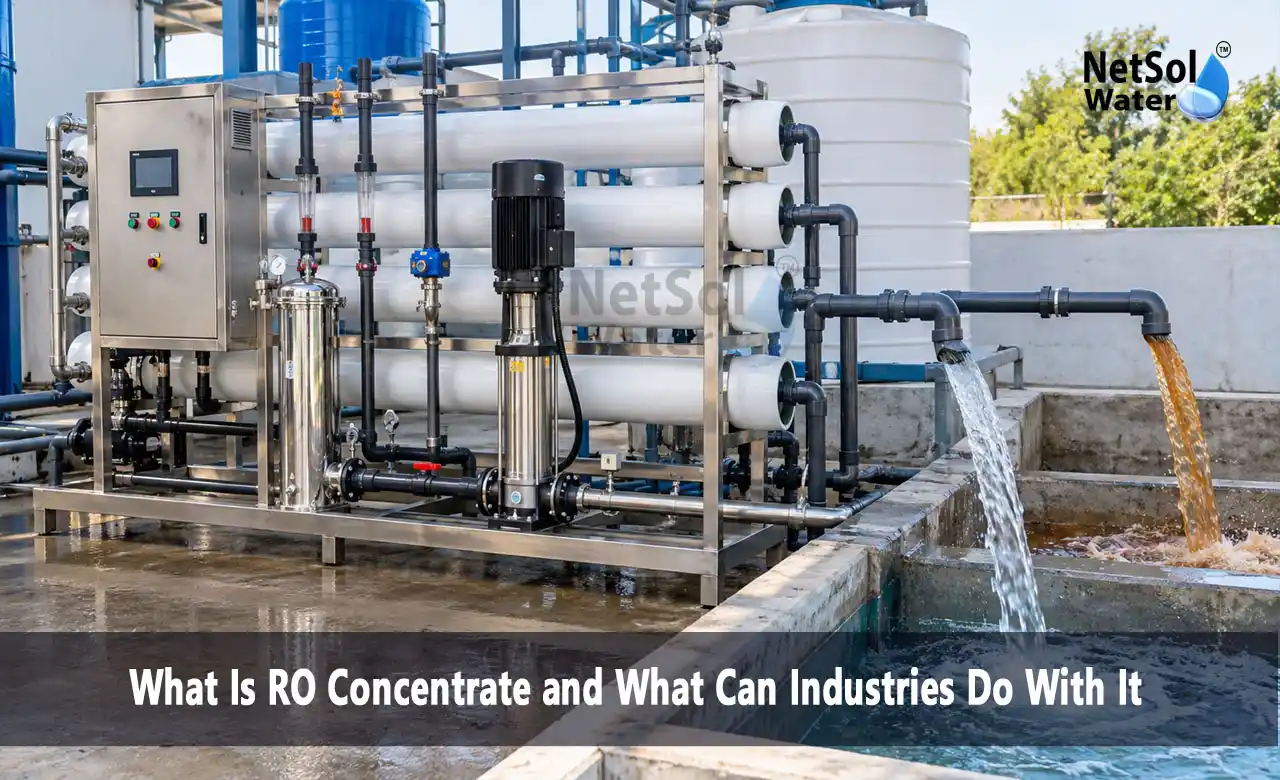
What Is RO Concentrate and What Can Industries Do With It?
Water plays an important role in almost every industrial process. Factories need treated water for production, for boilers, for cooling systems and for cleaning operations. India is known for its wide industrial base and growing manufacturing sector, and this growth has increased the need for better water treatment solutions. Industrial RO plants help industries treat difficult water and produce water that meets process needs. Yet reverse osmosis does not turn all feed water into clean water. It separates dissolved salts and other unwanted substances from water, and this process creates a concentrated stream called RO concentrate. Many industries still treat this stream as waste, and that approach can increase disposal costs and create water management problems. Proper handling can offer better results.
Why RO Concentrate Matters in Industrial Water Treatment?
Understanding RO concentrate helps industries manage their water systems in a better way. This stream carries many of the substances that the RO membrane removes from the feed water. Its volume and quality can change based on the feed water and the operating conditions. Let us look at why this stream needs proper attention and how it forms during treatment.
How RO Concentrate Forms?
Reverse osmosis uses pressure to push water through a semi-permeable membrane. The membrane allows water molecules to pass through while it holds back many dissolved salts. Suspended matter and other unwanted substances also remain in the feed stream. The treated water that passes through the membrane becomes the product water, while the remaining stream carries a higher concentration of rejected substances. This stream is known as RO concentrate or RO reject.
The quality of RO concentrate depends on several factors. Feed water quality has a direct effect on its composition, and membrane recovery also changes the concentration level. A system that recovers more water can produce a smaller reject volume, but the reject stream can become more concentrated. This is why industries must understand their system before choosing a disposal or reuse method.
Why Industries Should Manage It?
RO concentrate needs proper management because it contains a higher level of dissolved salts and other substances. Direct discharge may not suit every location or industry, and it can create extra treatment needs when local discharge limits are strict. Poor handling can increase operating costs and place more pressure on the complete water treatment system.
Good reverse osmosis reject management can help industries control these challenges and improve water recovery. A well-planned system can identify opportunities to reuse part of the concentrate and can separate recovery goals from disposal needs. This approach allows industries to use their water resources more carefully, and it helps them plan treatment systems with long-term operating needs in mind. Learn more about the advantages of an industrial RO plant for a broader view of how good system design supports these goals.
What Can Industries Do With RO Concentrate?
Industries have several ways to manage RO concentrate. The right option depends on the concentrate quality and the plant design, and it also depends on local rules and the amount of water the facility handles. A useful approach starts with testing the stream, since the results can show which recovery or disposal method suits the facility. Let us look at some practical options that industries can consider.
Recover More Water
One of the most useful options involves recovering more water from the reject stream. Some industries can use additional treatment to extract more usable water. Additional membrane systems can provide another stage of treatment, and advanced evaporation systems can also help in cases where water recovery needs to be very high. The recovered water can sometimes return to industrial processes, and it may also support cooling or other suitable applications after proper treatment. This approach can lower fresh water demand and reduce the amount of concentrate that needs final disposal.
The right recovery system depends on the quality of the RO concentrate. Industries should assess scaling risks and membrane fouling risks before adding another treatment stage, and they should also review energy use and maintenance needs. A recovery system should provide practical value rather than add unnecessary operating costs.
Reuse Resources from the Concentrate
RO concentrate may contain useful dissolved minerals or salts. Some industrial processes can take advantage of these materials, and the feasibility depends on the composition of the concentrate and the needs of the facility. Industries that already use certain salts in their processes may find opportunities for internal reuse.
This method can support a circular water management approach. Instead of treating every stream as waste, the industry can look for useful applications within the plant. In some cases the concentrate can also move through other treatment units before final disposal, including systems designed around Zero Liquid Discharge in industrial RO plants for facilities that need to recover nearly all of their process water.
However, reuse should always follow proper testing. The concentrate may contain substances that limit direct reuse, so industries must check its chemical quality before they introduce it into another process. Proper assessment can prevent damage to equipment and protect product quality.
How Industrial RO Plants Support Better Reject Management
A good water treatment strategy should address both product water and reject water. Industrial RO plants can deliver strong water recovery when industries design them around actual feed water conditions. A complete plan should consider membrane performance, pretreatment and final reject handling. Let us look at how better system planning can support more effective reject management.
Improve System Design from the Start
Better reject management begins during system design. Engineers need to study the feed water before selecting membranes and recovery targets, and they should understand the salt load and the presence of hardness and other dissolved substances. This information helps them choose suitable treatment stages.
Pretreatment also plays an important role. Proper pretreatment can protect membranes and support stable operation, and stable operation can improve recovery and reduce avoidable cleaning needs. A well-designed system can also provide options for handling the concentrate based on the site conditions.
Industries should avoid choosing a system only on the basis of initial cost. A low-cost design may create higher reject handling costs later. A more balanced approach looks at water recovery, energy use, maintenance and disposal together. Industrial RO plants work more effectively when all these factors form part of the same design plan.
Select the Right Final Management Method
Every industry has different needs. Some sites may reuse the concentrate after further treatment, while others may require a dedicated disposal system. Some facilities may combine water recovery with controlled concentrate disposal. The right method should match the stream quality and the plant's operating conditions. Testing helps industries make this decision with better clarity, and regular monitoring can show changes in concentrate quality over time. It can also help operators identify process changes that affect recovery. This makes reverse osmosis reject management an ongoing task rather than a one-time decision.
Industries should also review local discharge requirements before selecting a final method. Proper planning can prevent compliance issues and unexpected treatment expenses, and it also helps the plant create a stable water management system that supports long-term operations.
Conclusion
Effective water treatment does not end when clean water leaves the RO membrane. Industries also need to manage the concentrate that remains after the process. Smart planning can help recover more water, improve resource use and control disposal needs, and it can also support better plant performance over time. Proper reverse osmosis reject management gives industries a practical way to handle concentrate based on their water quality and process requirements.
Netsol Water is the leading name in industrial water treatment solutions and can help industries understand their treatment and reject handling needs. A detailed assessment can identify suitable recovery options and practical management methods for the site. Contact Netsol Water to learn more about industrial RO plants and request a consultation for your water treatment requirements.
Contact Netsol Water at:
Phone: +91-9650608473, Email: enquiry@netsolwater.com