

What is E20 Fuel, Its Effect on Engines, and How Biofuel Benefits India?
In E20 Fuel, E20 stands for 'Ethanol 20', a program designed to reduce energy consumption in India. The program focuses on improving energy efficiency across all sectors, from residential buildings to industrial production. This can be achieved through increased use of renewable energy sources, improved building insulation and design, and new technologies such as smart meters. The goal is to reduce energy consumption by 20 percent by 2030 in India.
Full Form of e20 is Ethanol 20
What is E20 fuel?
E20 fuel is a new type of fuel that has been developed to reduce the amount of harmful emissions from cars and other motor vehicles. It is a blend of 20 percent ethanol and 80 percent gasoline, and has been gaining popularity in recent years as more people are looking for cleaner burning fuels.
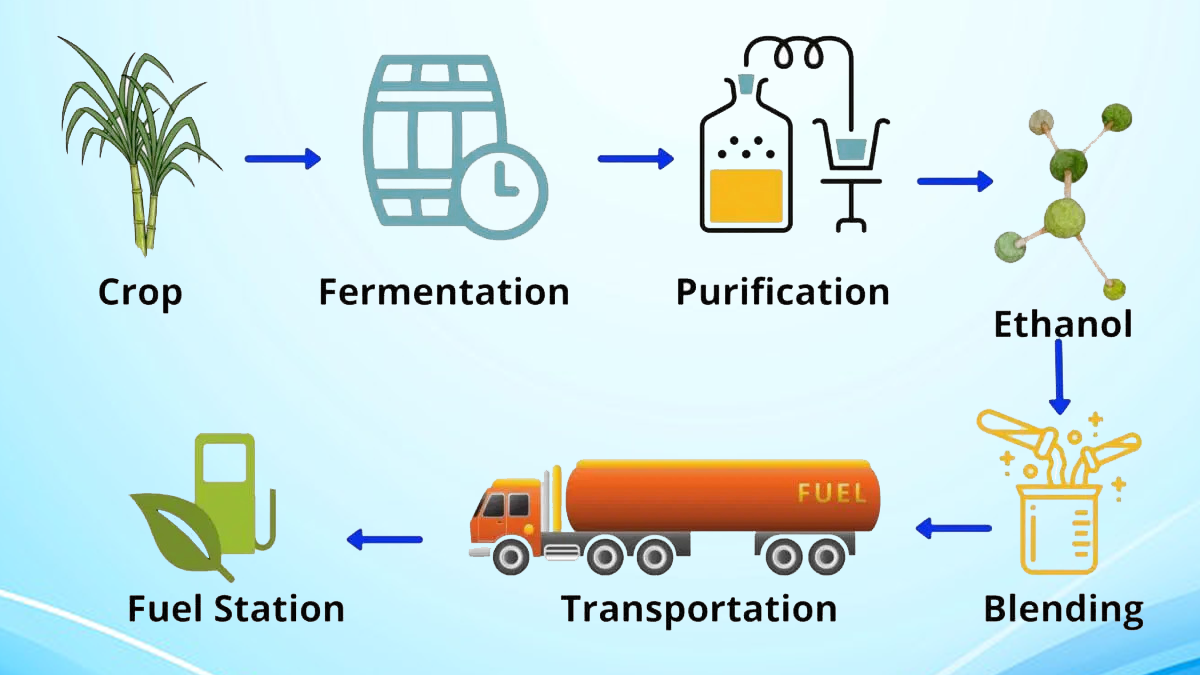
Ethanol is an alcohol-based fuel derived from renewable sources such as corn, sugar cane, wheat, barley and other grains. When blended with gasoline, it helps to lower harmful emissions such as nitrogen oxide (NOx), carbon monoxide (CO) and hydrocarbons (HC). This means that E20 reduces air pollution significantly when compared to standard gasoline-only fuel.
Why is E20 a biofuel?
E20 is a biofuel that has recently been gaining in popularity due to its environmental and economic benefits. E20 biofuel is a blend of 20% ethanol, which is derived from renewable sources such as corn, sugarcane, and other plant materials, and 80% traditional petroleum-based fuels. This blend has numerous advantages over unblended petroleum fuels, making it an excellent choice for those looking to reduce their environmental impact while still maintaining the performance of their vehicle.
To understand why E20 is called a biofuel, we need to look at its composition. E20 is a blend of 20% ethanol and 80% regular gasoline. Ethanol, or ethyl alcohol, is an organic compound made from plant materials such as corn or sugarcane. This renewable source of energy can be used as an alternative to gasoline in cars and other vehicles.
India has achieved the E20 target
This is where the E20 story has changed significantly in recent years.
India achieved 20% ethanol blending in petrol in 2025, five years ahead of its original 2030 target. Ethanol blending rose from roughly 1.5% in 2014 to 20% in 2025, an increase of about 13 times over 11 years.
From April 2026, petrol sold across India is required to be E20 (20% ethanol) and to meet a minimum Research Octane Number (RON) of 95. In practical terms, the petrol you fill at the pump today already contains ethanol.
The programme is driven by the Ethanol Blended Petrol (EBP) Programme and the National Policy on Biofuels (2018, amended in 2022), which advanced the 20% blending deadline from 2030 to 2025-26 and allowed a wider range of feedstocks including sugarcane juice, molasses, maize, damaged food grains and agricultural residues.
Does E20 fuel damage engines?
The debate over whether E20 fuel is harmful to engines has been raging for some time now. While there is no definite answer to this question, it is important for drivers to understand the potential risks and benefits of using E20 fuel.
E20 fuel is a blend of 20% ethanol and 80% gasoline, and as such, it has both pros and cons. On the plus side, E20 fuel can provide improved performance in some vehicles due to its higher octane rating. It can also help reduce emissions since ethanol burns cleaner than gasoline. The downside is that it may cause engine damage if used improperly or in an unsuitable vehicle.
One of the primary concerns with using E20 fuel relates to its corrosive properties. Ethanol can corrode certain materials within an engine, such as rubber seals, gaskets and plastic components. In addition, ethanol tends to absorb water more quickly than gasoline does which can lead to rusting issues over time. Finally, if too much ethanol is used in a vehicle’s fuel system it can cause clogging which could lead to engine failure or other problems.
It’s important for drivers who are considering using E20 biofuel to do their research first before making any decisions about their vehicles’ fuels systems. Some vehicles may be able to safely use blends containing up to 10% ethanol without any issues while others may not be able to handle more than 5%. It’s also important for drivers who choose to use E20 fuel in their vehicles make sure they are following all recommended maintenance guidelines from their vehicle manufacturer as well as regularly checking their car’s oil level and performing other preventative maintenance tasks on a regular basis in order minimize the risk of engine damage or other problems related to using this type of fuel blend.
Ultimately, whether or not you choose use E20 Fuel will depend on your individual circumstances but it’s definitely something that should be researched carefully before making any decisions about your car's fueling system needs!
E20 fuel and mileage: the honest picture
One point that drivers should know is that ethanol has a lower energy density than petrol. Because of this, the government has acknowledged that E20 can result in approximately a 6 to 7% reduction in fuel efficiency compared to plain petrol.
This is a genuine trade-off. In return, E20 delivers cleaner emissions, lower crude oil imports and stronger energy security for the country. Vehicles that are specifically tuned and optimised for E20 tend to minimise this efficiency gap.
How will E20 biofuel benefit India?
India is a country that is growing rapidly and developing its infrastructure to become one of the leading global economic powers. In this pursuit, the government has been taking various steps and initiatives to ensure the nation's growth and development. One such initiative is the introduction of E20, a concept that has been gaining popularity in recent years.
The implementation of E20 biofuel will have several positive impacts on India's economy and environment:
1. First, it will help reduce greenhouse gas emissions while increasing air quality throughout the country. This will benefit India's health care system as well as its citizens overall wellbeing - something that cannot be understated in a time where air pollution has become an ever-growing concern.
2. Secondly, it will create jobs in the renewable energy sector as companies look for ways to improve their efficiency standards with new technologies and practices. This could lead to job creation for skilled workers who are knowledgeable about sustainable solutions for reducing energy consumption.
3. Thirdly, it can help drive down electricity costs by reducing overall demand for electricity from traditional sources like coal-fired power plants which are not only expensive but also contribute heavily to air pollution levels in India's cities and townships.
4 Finally, with improved efficiency standards there will be less strain on existing power grids which should result in more reliable electricity supply across the country - something that many parts of rural India are sorely lacking today due to over stressed infrastructure networks.
All these factors make E20 biofuel an important part of India's future economic growth plans - helping it reach its goal of becoming a global leader while protecting its environment at the same time.
What comes after E20?
Having reached E20 ahead of schedule, India is already planning the next phase. The government is working towards higher blends such as E25, E27 and E30 in a phased, calibrated manner, supported by BIS standards and fiscal incentives. Prototypes for E85 and E100 flex-fuel vehicles, which can run on much higher ethanol blends, are also being developed.
This roadmap signals that ethanol will play an even larger role in India's fuel mix in the years ahead.
Frequently Asked Questions (FAQ)
Q1. What is the full form of E20?
E20 stands for Ethanol 20, meaning a blend of 20% ethanol and 80% petrol.
Q2. Does E20 reduce mileage?
Yes, slightly. The government has acknowledged an approximate 6 to 7% drop in fuel efficiency because ethanol has lower energy density than petrol. Vehicles optimised for E20 reduce this gap.
Q3. Can my old vehicle run on E20?
Most vehicles on the road today are built to handle E20. Very old vehicles should be checked for E20 compatibility with the manufacturer. The government has reported no engine failures after E20 became the base fuel.
Q4. When did India achieve E20?
India achieved 20% ethanol blending in petrol in 2025, five years ahead of its original 2030 target.
Q5. Is E20 a biofuel?
Yes. Because 20% of the blend is ethanol made from renewable plant sources, E20 is considered a partial biofuel.
Netsol Water leading wastewater & water treatemnt comapnies in Delhi NCR, India assures total client and customer satisfaction with this all-inclusive approach to offering specialised industrial solutions. Netsol anticipates market expectations and then provides original solutions. Visit enquiry@netsolwater.com or place a call at +91-9650608473 to know more.