

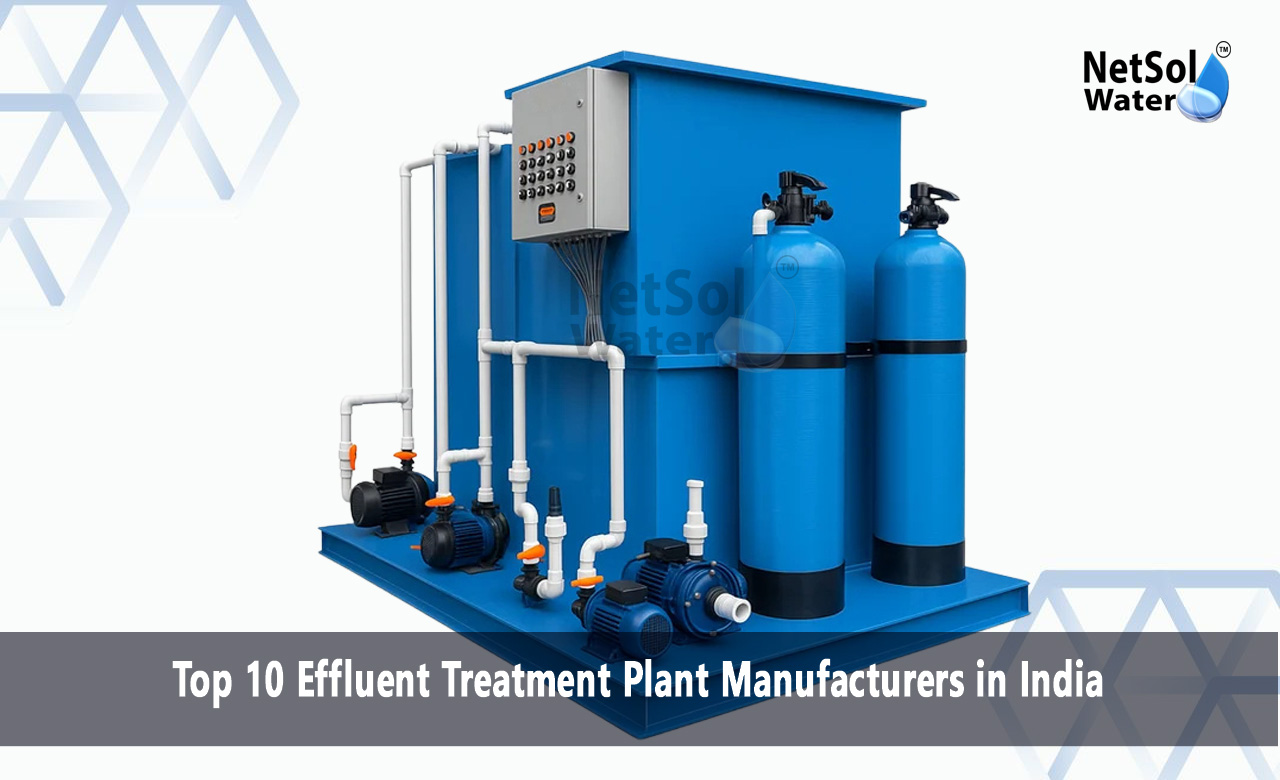
Top 10 Effluent Treatment Plant Manufacturers in India (2026 Guide)
If you're running a manufacturing unit, whether it's pharmaceutical, textile, chemical or food processing, an Effluent Treatment Plant isn't optional today. It's a matter of compliance and brand reputation.
Too often, industrial buyers make decisions based solely on price comparisons. Later, they discover:
1. COD isn't being reduced
2. SPCB approval is delayed
3. Sludge handling issues have arisen
4. The system is overloading
Choosing an effluent treatment plant manufacturer isn't just about buying equipment, it's a decision about long-term environmental responsibility and operational cost.
We've compared India's leading effluent treatment plant manufacturers from a practical, engineering-first perspective, not a marketing one.
Why is ETP selection critical in India?
The CPCB and State Pollution Control Boards are tightening discharge norms every year, especially for:
1. Pharmaceuticals
2. Textile & Dyeing
3. Chemicals
4. Dairy & Food Processing
5. Automobile & Metal Processing
If treated water exceeds discharge limits (BOD, COD, TSS), the consequences are serious:
1. Heavy penalties
2. Plant closure notices
3. NOC renewal issues
This is why the manufacturer's engineering experience, not just their sales pitch, should drive your decision.
Why Choosing the Right Effluent Treatment Plant Manufacturer is Important?
A professional ETP Plant manufacturer in India does more than just supply equipment. They provide:
1. Process design & engineering
2. Installation & commissioning
3. CPCB/SPCB compliance support
4. Automation & online monitoring
5. Annual Maintenance Contracts (AMC)
The right manufacturer ensures consistent treatment performance, lower operating cost and long-term regulatory compliance.
Top 10 ETP Plant Manufacturers in India
1. Netsol Water
Netsol Water is a leading Effluent Treatment Plant Manufacturer in India, offering turnkey industrial ETP solutions using MBBR, MBR, SBR and ZLD technologies. Based in Greater Noida, Netsol Water serves pharma, textile, FMCG and chemical industries across Delhi NCR and Pan India with customized plant design, installation, and complete AMC support.
Specialties: Industrial ETP, STP, RO Plants, ZLD systems, AMC services
Service Areas: Pan India, with strong presence in Delhi NCR, Noida, and Gurugram
Why consider them: Fast response times for Delhi NCR clients, transparent AMC pricing, and end-to-end support from design to post-installation service, which many larger, multi-division companies deprioritize once installation is complete.
2. Thermax Limited
Thermax is a large, diversified energy and environment company with a dedicated water and wastewater division. They focus on high-strength effluent treatment for sectors like oil and gas, chemicals, and food processing, offering both aerobic and anaerobic treatment options.
Specialties: ETP, STP, tertiary treatment, energy-linked water treatment systems
Best suited for: Large industrial plants needing heavy-duty, high-capacity systems backed by extensive R&D.
3. VA Tech Wabag
Wabag is a pure-play water technology company with a strong track record in large government and municipal contracts, alongside industrial projects. They're known for water recycling systems that support Zero Liquid Discharge goals.
Specialties: ETP design, ZLD systems, large-scale municipal and industrial projects
Best suited for: Very large-scale projects requiring international-grade engineering.
4. Ion Exchange India
Ion Exchange has decades of presence in India's water management sector, with deep expertise in resins and a wide range of water treatment technologies. Their nationwide service network is a strength for businesses in remote locations.
Specialties: ETP, water recovery systems, resin-based treatment, large-project execution
Best suited for: Businesses needing a manufacturer with an extensive pan-India service footprint.
5. Arvind Envisol
Arvind Envisol specializes in end-to-end water treatment including ETP, STP, desalination and ZLD, with particular strength in Mechanical Vapour Recompression Evaporator (MVRE) and Multi-Effect Evaporator (MEE) technology for ZLD applications.
Specialties: ZLD systems, MVRE/MEE evaporators, industrial effluent treatment
Best suited for: Industries needing high water-recovery ZLD systems (textile, pharma).
6. Veolia
Veolia provides high-capacity effluent treatment and water reuse plants for heavy industries, with a focus on energy optimization and digital monitoring.
Specialties: ETP, water recycling, sludge treatment, digital monitoring
Best suited for: Large industrial groups wanting global-standard digital plant monitoring.
7. Wiprowater
A part of the Wipro group, Wiprowater focuses on sustainable, data-driven industrial water management with scalable treatment modules.
Specialties: Smart water management, modular ETP systems
Best suited for: Companies prioritizing sustainability metrics and corporate ESG reporting alongside compliance.
8. Praj Industries
Praj Industries is known for its bioprocess and environmental engineering solutions, including wastewater treatment systems for distilleries, sugar, and process industries.
Specialties: ETP for process industries, bioprocess-linked wastewater systems
Best suited for: Distillery, sugar, and biofuel-linked industrial effluent.
9. EIMCO Elecon
EIMCO Elecon offers ETP and industrial wastewater equipment with a focus on mechanical treatment components (clarifiers, thickeners) alongside full systems.
Specialties: Mechanical treatment equipment, clarifiers, sludge thickening systems
Best suited for: Buyers who need reliable core equipment as part of a larger custom-built plant.
10. Sewage Doctor
Sewage Doctor provides compact and modular ETP solutions for small and medium industries, with a focus on fast deployment.
Specialties: Compact ETP units, modular systems, quick installation
Best suited for: SMEs needing lower-capacity, faster-installed systems.
Note: This list reflects publicly available company information and is intended as a general comparison. Always verify current capabilities, certifications, and pricing directly with each manufacturer before finalizing a vendor.
How an ETP Plant Actually Works?
Understanding the treatment process helps you evaluate any manufacturer's proposal more critically. A standard ETP works through these stages:
1. Screening and Collection: Removes large solids to protect downstream equipment.
2. Equalization: Effluent is held for 8 to 12 hours to neutralize pH and concentration fluctuations before treatment.
3. Flash Mixing and Coagulation: Lime, alum, and polyelectrolyte are dosed to bind suspended particles into flocs.
4. Clarification: Flocs settle out as primary sludge; clarified water moves to aeration.
5. Aeration (Biological Treatment): Air or oxygen is supplied to bacteria that break down organic matter, reducing BOD and COD by up to 90 percent.
6. Secondary Clarification: Biological sludge settles; part is recycled to maintain bacterial population, rest goes to sludge handling.
7. Sludge Thickening and Drying: Sludge water content is reduced via centrifuging and drying beds before disposal.
8. Tertiary Treatment (if required): Filtration, RO, or activated carbon for water reuse grade quality.
Any manufacturer proposing to skip stages relevant to your effluent characteristics is likely cutting corners that will show up as compliance failures later.
Key Technologies Used by Leading ETP Manufacturers
1. MBBR (Moving Bed Biofilm Reactor): compact, efficient biological treatment
2. SBR (Sequencing Batch Reactor): batch-based, good for variable flow
3. MBR (Membrane Bioreactor): high-quality effluent, smaller footprint
4. ZLD (Zero Liquid Discharge) Systems: for water-scarce regions or strict discharge zones
5. Tertiary Treatment and RO Reuse Systems: for water recycling back into operations
Technology selection depends on effluent characteristics, discharge norms, and reuse requirements, not on what's cheapest to install.
Industries That Need Industrial ETP Systems
1. Textile & Dyeing Units
2. Pharmaceutical Manufacturing
3. Food & Beverage Processing
4. Chemical & Petrochemical Plants
5. Hospitals & Laboratories
6. Automobile & Engineering Industries
Each industry has different chemical loads and requires a specific process design.
How to Choose the Right ETP Manufacturer?
Before finalizing a supplier, evaluate:
1. Experience in your specific industry sector: a textile-focused ETP design differs significantly from a pharma one.
2. Compliance support with SPCB/CPCB: do they help with documentation and approvals, or just install and leave?
3. After-sales service and AMC terms: read the fine print on response time and cost.
4. Automation and monitoring options: online monitoring reduces manual compliance risk.
5. Local presence and response time: for Delhi NCR industries, a manufacturer based in the region (like Netsol Water) generally means faster service response than a company managing your account from another city or a distant regional office.
Frequently Asked Questions (FAQs)
Q1: How much does an ETP plant cost in India?
Cost depends on flow rate (KLD), effluent characteristics, and technology used. Small units (5 to 10 KLD) can start in the lakhs, while large industrial ZLD systems run into crores. Always get a proposal based on your actual effluent lab analysis, not a generic quote.
Q2: What's the difference between an ETP and an STP?
An ETP (Effluent Treatment Plant) treats industrial wastewater containing chemical pollutants specific to a manufacturing process. An STP (Sewage Treatment Plant) treats domestic and sanitary wastewater. The treatment stages differ based on what's being removed.
Q3: How long does ETP installation take?
For a standard modular ETP, installation typically takes 4 to 8 weeks after design finalization, depending on capacity and site readiness. Custom large-scale systems can take longer.
Q4: What is the average lifespan of an ETP system?
A well-maintained plant can last 15 to 20 years. Regular filter changes, sensor calibration, and following the AMC schedule significantly extend system life.
Q5: Do I need a full-time operator?
Most industrial ETPs need a trained person for daily monitoring and chemical dosing checks, though automated systems reduce this burden significantly with remote alerts.
Conclusion
With stricter environmental regulations and rising water reuse needs, partnering with a reliable Effluent Treatment Plant Manufacturer has become essential for Indian industries. Evaluate manufacturers on technical depth, compliance support, and after-sales responsiveness, not just upfront price.
For Delhi NCR businesses specifically, Netsol Water combines turnkey ETP engineering with fast local service and transparent AMC support, worth a direct conversation before you finalize your vendor.
Call +91-9650608473 or write to enquiry@netsolwater.com for a site-specific ETP proposal.