

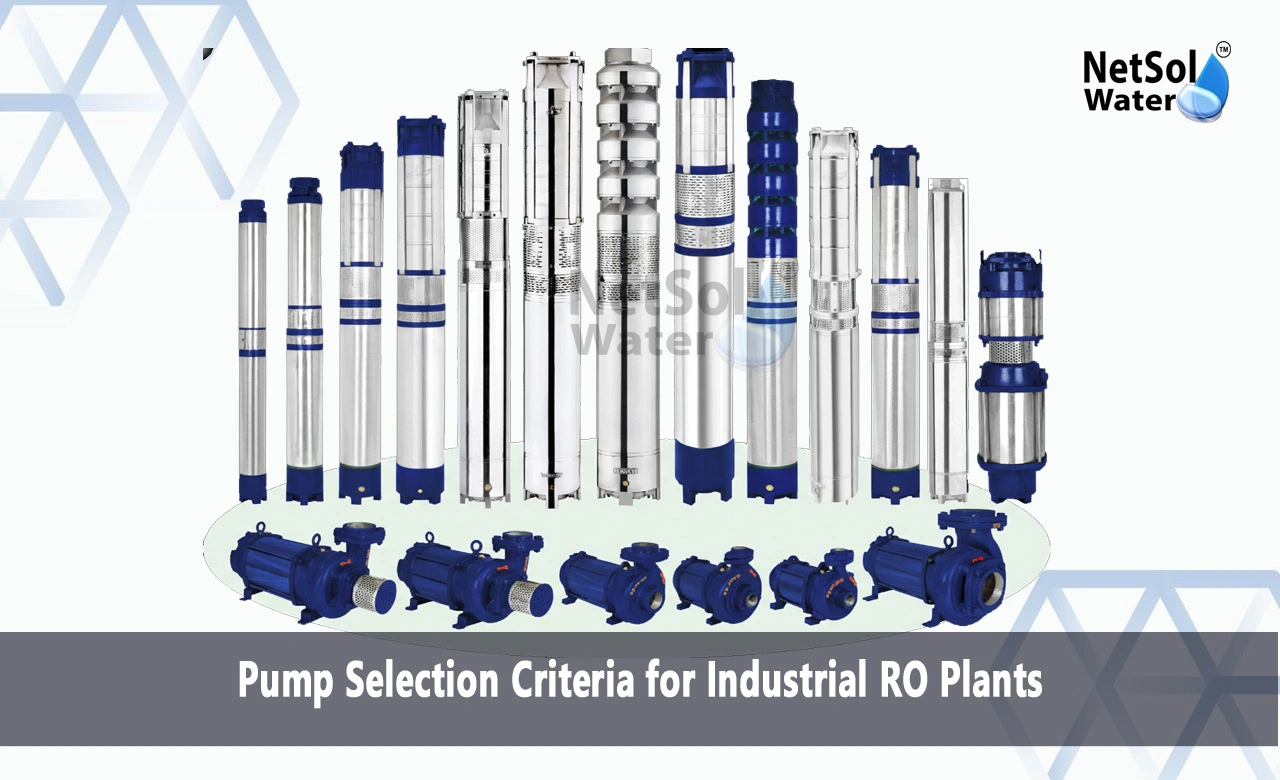
What are the Criteria for Pump Selection in Industrial RO Plants?
The hydraulic stability, energy use, and membrane functioning of an industrial reverse osmosis system rely on the driving force provided by the pumps. Although the calculations of RO design and the quality of the membranes are accurate, the wrong choice of the pump can silently reduce the efficiency of the system, raise the cost of its operation, and reduce the duration of service of equipment. High pressure, unstable flow, or damage to membranes are also many of the core causes of industrial RO failures that are ultimately caused by incorrect selection or sizing of the pumps.
Understanding the pump selection criteria for industrial RO plants is therefore a critical design step, not a mechanical afterthought.
The Role of Pumps in RO Systems in Industry
The types of pumps usually used in industrial RO plants are the feed pumps, the high-pressure pumps and in some cases, the booster or circulation pumps. The most affecting of these is the use of the high-pressure pump since it directly determines the flux of membrane, stability of recovery and salt rejection.
The operation of pumps influences pressure balancing among stages, permeate quality, and capability of the system to adjust to changes in feed water temperature and quality.
Pump Selection Criteria for Industrial RO Plants
1: Flow Rate and Operating Range Requirement
The pump flow should be equal to the design feed flow of the RO system under any condition of operation. By choosing a pump with a favorable efficiency level, it is possible to achieve constant levels of flow delivery with as little vibration and wear as possible. The fact that pumps that are much distant are often at operation means that they provide pressure bursts that put stress on membranes and piping.
2: Total Dynamic Head and Pressure Margin
Total dynamic head comprises operating pressure, piping losses, membrane resistance and safety margin. The correct calculation is needed to avoid under-pressurization which minimizes the permeate yield, or over-pressure, which increases the rate of membrane compaction and fouling. Pressure margin must be able to take seasonal temperature change and gradual membrane foulage without excessive oversizing.
3: Pump Efficiency and Energy Consumption
One of the leading operating costs in the industrial RO plants is the energy cost. The high-efficiency pumps are efficient in terms of power consumption, as well as lifecycle cost. Efficiency curves should be calculated at practical operating conditions but not on nominal ratings so as to have realistic energy operation.
4: Feed water Compatibility Material
The pump materials shall be in line with feed water chemistry. Corrosion of standard materials can occur due to high TDS, water with high chloride content or treated effluent. Duplex alloys and stainless steel grades are commonly used to be able to withstand chemical attack and to be reliable in the long run.
5: Operating Flexibility and Control Integration
There are fluctuating feed conditions and production demand in the industrial RO plants. Variable frequency drives must be suitable with pumps in order to enable the control of pressure and flow accurately. This flexibility safeguard membranes during load change, startup and shutdown.
6: Accessibility to Maintenance and Reliability
The choice of the pumps should also be based on the following parameters: the service periods, accessibility of spares, and the maintenance. Continuous high pressure pumps need high bearing design and efficient cooling. Lack of access to maintenance frequently leads to delayed services and unanticipated downtimes.
Mistakes in Choosing Pumps
A common error made is the choice of pumps with the highest max pressure instead of operating range. The other is the oversizing of pumps in order to be on the safe side and results to inefficient operation and increased cost of energy. Neglecting feed water corrosivity and selection of wrong materials lead to earlier failure of the pumps as well.
Moreover, failure to integrate with the control systems leads to unstable pressure behavior, which has a direct effect on the membrane life.
Conclusion
Correct Pump Selection Criteria for Industrial RO Plants ensure stable system hydraulics, controlled energy consumption, and long membrane life. The choice of pumps should be done as the entire design of the RO process and not as independent mechanical units.
When flow, pressure, efficiency, material compatibility, and operational flexibility are optimally balanced, pumps are helpful in facilitating the reliable performance of RO during the entire operational life of the plant. Considerate choice of the pump is not an expense cost but the essential decision of sustainability and performance of the system.
Do you need an advice or assistance on selecting the best water and waste water treatment unit? We have solutions for all your problems!
Let us know your problem, our experts will make sure that it goes away.
For an assistance or related query,
Call on +91-9650608473 Or write us at enquiry@netsolwater.com