What are Instrumentation & Sensors Used in Industrial RO Systems?
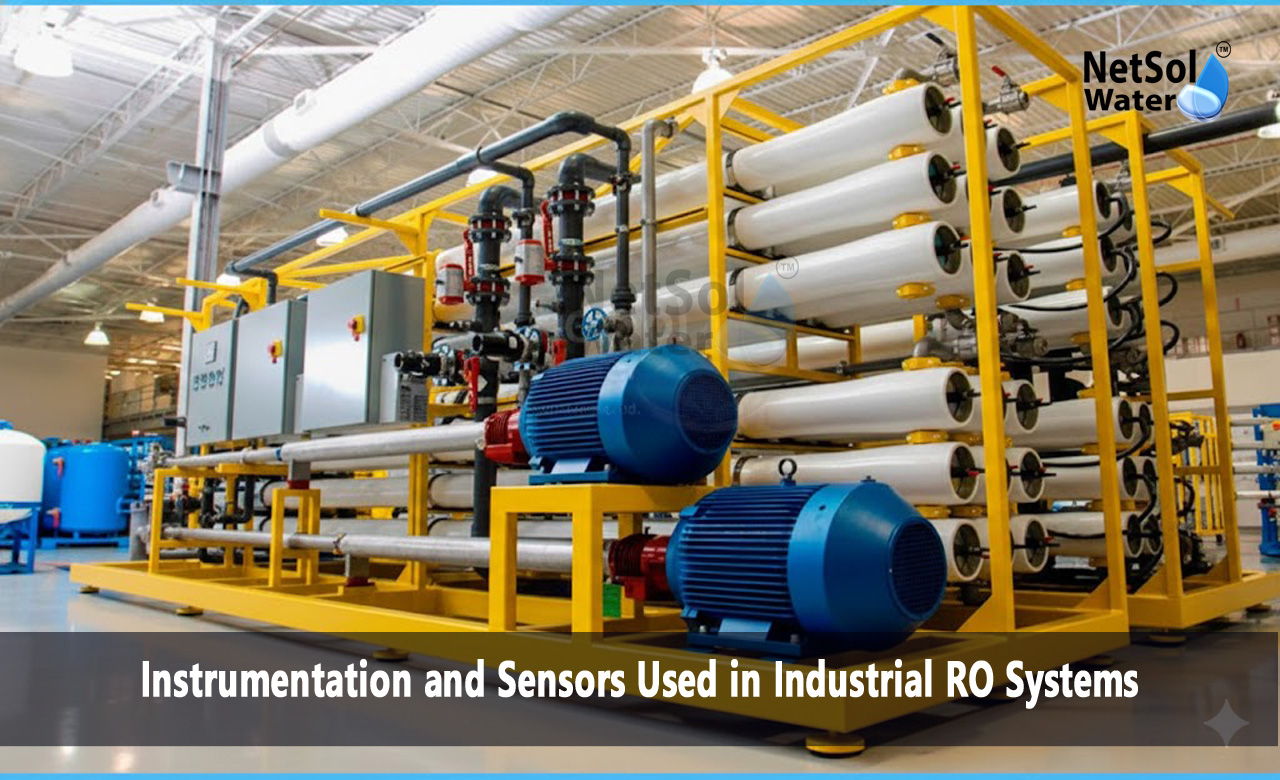
Industrial reverse osmosis systems do not work alone using membranes and pumps; precise instrumentation and sensors are needed to be able to work safely and efficiently. Even the designed RO plant will experience damage to its membranes, poor water quality and unforeseen outages without appropriate monitoring. Instrumentation is the eyes and ears of an industrial RO plant and is used to gather real-time information that can assist operators to keep an optimum performance.
Understanding the instrumentation & sensors used in industrial RO plants is essential for reliable operation, preventive maintenance, and regulatory compliance.
Significance of Instrumentation in the Industrial RO Plants
It can be continuously monitoredwith regard to pressure, flow, water quality, and system health through instrumentation. These measurements allow to observe the early symptoms of fouling, scaling, leakage or membrane failure. Sensors are also important in automation which is used to maintain consistent production with minimum human error.
The right equipment and its proper choice and calibration will lead to better recovery, reduced operation costs, and increased lifespan.
Key Instrumentation & Sensors Used in Industrial RO Plants
1: Pressure Transmitters and Pressure Gauges
Feed, interstage and concentrate lines are important points of measurement of pressure. These tools aids in tracking pressure drop across membranes which is one of the major signs of foulness or obstruction. Transmitters constantly feed control systems with datawhereas gauges give instant visual confirmation.
2: Flow Meters
Flow meters determine the flow rate of the feed, permeate, and reject. Measurement of the flow accurately means that the system is functioning within design parameters and that recovery is stable. Flow variations may be used as evidence of leakage or pump-related damage to the membranes.
3: Conductivity and TDS Sensors
Sensors of conductivity indicate the level of dissolved salt in feed and per TDS water. Such sensors are necessary to monitorperformance of salt rejection and quality of permeate. When permeate conductivity suddenly rises it is a sign of membrane failure or sealing.
4: pH Sensors
pH sensors are used to check the effectiveness of feed water and chemical dosing. Having a proper pH is very important in the prevention of scaling, protection of membranes, and cleaning. Constant PH checking can be used to optimize the antiscalants and chemical dosage.
5: Temperature Sensors
Membrane permeability and operating pressure depend on the water temperature. Automatic compensation in system controls is enabled by temperature sensors and maintains the same performance in seasonal variations.
6: Level Sensors
Feed tanks, CIP tanks and permeate storage tanks have level sensors. They stop pump dry running, overflow situations, and wrong chemical combination, which leads to system safety and reliability.
7: Reduction Potential Oxidation Sensors
These detectors observe oxidizing agents in feed water like chlorine. ODBs are oxidant sensitive so RO membranes will be alerted before irreversible damage occurs.
Instrumentation in Automation and Control
Instrumentation data are then combined with PLC or SCADA systems to provide automatic control of the pressure, balancing the flow, and automatic generation of alarms. Automated reactions facilitate safeguarding of membranes under undesirable circumstances and lessen reliance on human input.
Predictive maintenance can also be achieved through advanced monitoring to determine the trends in advance of failures.
Typical Instrumentation Problems
The data accuracy can be compromised by improper sensor placement, absence of consistent calibration and exposure to severe operating conditions. Conductivity sensors and pH sensors are widely known to foul up and create a problem in industrial RO plants should they not be maintained.
Choosing the industrial grade tools and a regular calibration schedule assists in ensuring credible information.
Conclusion
The correct selection and maintenance of Instrumentation & Sensors Used in Industrial RO Plants are essential for stable operation, membrane protection, and consistent water quality. These elements make an RO plant look more like a smart controllable process rather than one that is mechanical.
Through proper instrumentation investment and the combination of the instrumentation with the automation system the industries can attain elevated efficiency, less downtime and increased system life.
Do you need an advice or assistance on selecting the best water and waste water treatment unit? We have solutions for all your problems!
Let us know your problem, our experts will make sure that it goes away.
For an assistance or related query,
Call on +91-9650608473 Or write us at enquiry@netsolwater.com