How to Choose the Industrial RO Plant Manufacturer for Your Industry?
Choosing the right Industrial RO Plant Manufacturer is a critical decision for industries that rely on clean and consistent water. Water quality affects product standards, machine life, energy use, and overall production efficiency. A well-designed RO system ensures smooth operations, while a poorly selected system can lead to frequent breakdowns and high maintenance costs.
This guide explains the key factors you should evaluate before selecting an Industrial Reverse Osmosis Plant Manufacturer.
Why Industrial RO Plants Are Important for Industries
Industrial RO plants remove dissolved salts, hardness, and harmful minerals from water. Treated water is commonly used in:
. Boilers
. Cooling towers
. Manufacturing processes
. Product formulation and cleaning
Different industries such as pharmaceuticals, food processing, electronics, and metal finishing require different water purity levels. Because of this, an Industrial Reverse Osmosis Plant Manufacturer must design systems based on actual process needs rather than offering standard solutions for every client.
Feed water may come from borewells, rivers, or municipal supplies, and each source contains different contaminants. Proper pretreatment is necessary to protect RO membranes from fouling and chemical damage. Without suitable pretreatment, membrane life reduces and operating costs increase.
Key Factors to Consider While Choosing an Industrial RO Plant Manufacturer
1. Industry Experience and Track Record
A manufacturer with experience in your industry understands your water quality requirements and operational challenges. They can design systems that meet production needs while minimizing downtime.
Before finalizing a supplier, check:
. Similar installations
. Client references
. System performance history
A reliable Industrial RO Plant Manufacturer will have proven projects and long-term operating systems in similar industries.
2. Engineering and System Design Capability
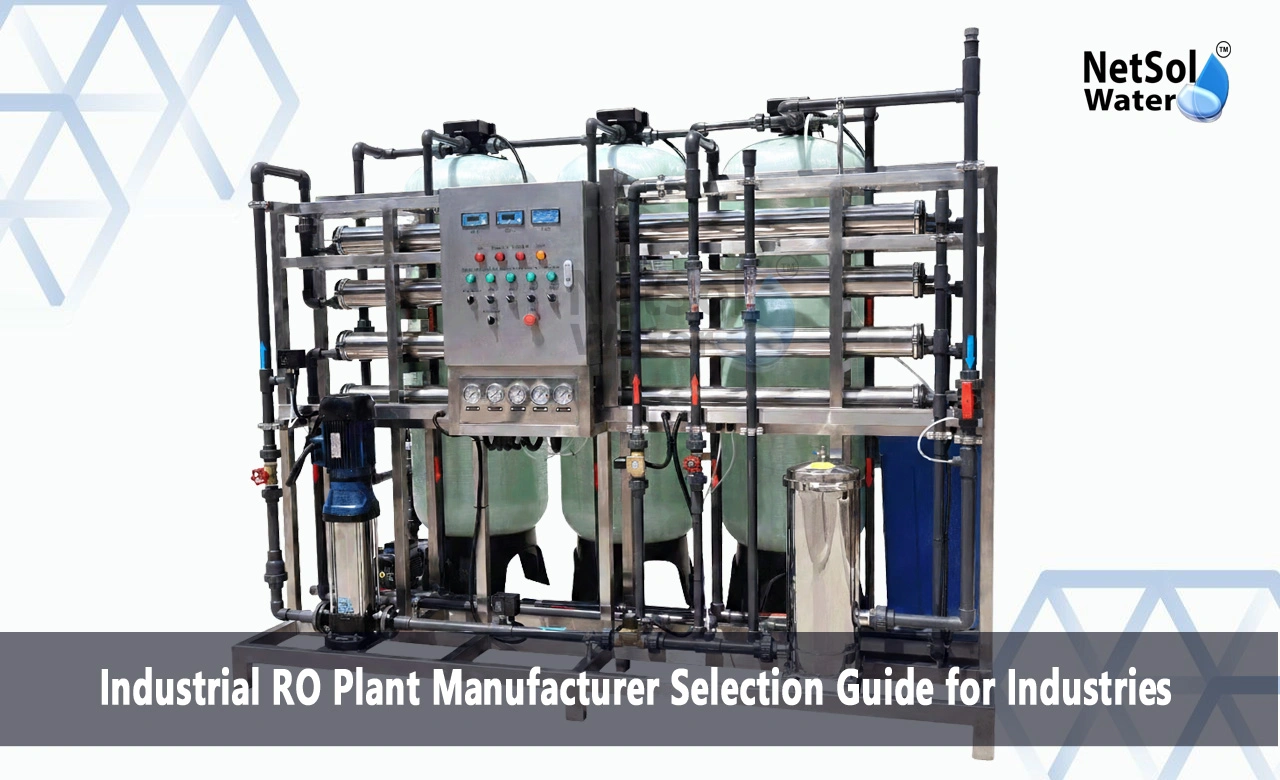
Every plant has unique layout constraints and production demands. Good manufacturers design systems that fit your space, allow future expansion, and match your actual water quality.
Important engineering aspects include:
. Proper pump sizing
. Suitable membrane configuration
. Correct pretreatment selection
. Safe chemical dosing systems
Automation is also essential. Modern RO plants use PLC-based controls that manage pressure, flow, and cleaning cycles. Automation reduces manual errors and ensures stable performance.
3. Water Analysis and Pretreatment Design
Pretreatment is one of the most critical stages of RO system design. It protects membranes from suspended solids, organics, iron, and chlorine.
Common pretreatment systems include:
. Multimedia filters
. Activated carbon filters
. Cartridge filters
. Antiscalant dosing
. Dechlorination units
An experienced Industrial RO Plant Manufacturer will design pretreatment based on laboratory water analysis and not on assumptions. Correct pretreatment improves membrane life and reduces chemical cleaning frequency.
Capacity Planning and Scalability
Selecting the correct plant capacity is essential for stable production.
Daily and Peak Demand Assessment
Water demand should include:
. Process water
. Boiler feed
. Cooling system makeup
. Cleaning operations
Peak demand during maintenance or batch processes must also be considered.
Planning for Future Expansion
If production is expected to increase, the RO plant should allow modular expansion. Many industries prefer modular skid systems that can be added later without replacing the entire setup.
Manufacturers should also provide performance guarantees under defined feed water conditions. Since membrane performance decreases over time, cleaning strategies and membrane replacement plans must be clearly explained.
Technology and Components That Affect Performance
1: High-Quality Membranes and Pressure Vessels
Membrane selection depends on feed water chemistry and required permeate quality. Pressure vessels must handle operating pressure and corrosion conditions safely.
Manufacturers should justify membrane choices and provide performance data when required.
2: Pumps and Energy Efficiency
Energy cost is a major operating expense. Efficient pumps and proper hydraulic design reduce electricity consumption. Variable frequency drives help match pump speed to demand and reduce power waste.
For large systems, energy recovery devices can significantly reduce operating costs by utilizing reject stream pressure.
3: Control Systems and Monitoring
Sensors for pressure, conductivity, and flow allow early fault detection. Data logging helps analyze long-term trends and plan maintenance.
A professional Industrial RO Plant Manufacturer integrates controls with plant SCADA systems when required.
Quality Standards, Testing, and Certifications
Certifications ensure compliance but must be supported by actual testing.
Manufacturers should provide:
. Pressure vessel compliance certificates
. Electrical safety certifications
. Material test reports
Factory Acceptance Tests should verify:
. Hydraulic performance
. Membrane output
. Automation functions
Water quality testing must confirm permeate meets required standards. For sensitive industries, third-party laboratory validation may be necessary.
Warranty terms must clearly define performance guarantees and maintenance responsibilities.
Installation, Training, and After-Sales Support
Installation quality directly affects long-term reliability.
Manufacturers should provide:
. Layout drawings
. Civil and piping guidelines
. Electrical interface details
During commissioning, full performance testing and operator training are essential. Operators should be trained in:
. Daily operation
. Safety procedures
. Chemical handling
. Cleaning processes
Maintenance support should include:
. Service contracts
. Spare part availability
. Defined response times
Remote monitoring and predictive maintenance tools further reduce downtime and unexpected failures.
Cost Evaluation and Long-Term Value
Price comparison alone can be misleading. Total cost of ownership provides better decision-making.
Costs include:
. Capital investment
. Energy consumption
. Chemical usage
. Membrane replacement
. Maintenance labor
An efficient system with good service support often costs less over its lifetime than a cheaper system with frequent breakdowns.
Reliable suppliers help reduce hidden losses caused by production stoppages and water shortages.
How to Compare Different Industrial RO Plant Manufacturers
Before final selection, compare suppliers based on:
. Technical design quality
. Customization ability
. Industry references
. Service response time
. Spare part availability
. Automation features
. Warranty terms
Site visits to existing installations help verify real-world performance.
Manufacturers that can handle challenging water conditions such as high silica, high TDS, or variable feed quality should be preferred for demanding industries.
Concl?usion
Selecting the right Industrial RO Plant Manufacturers ensures reliable water supply, stable production, and controlled operating costs. A good manufacturer focuses on proper pretreatment, correct membrane selection, efficient energy use, and strong service support.
Instead of choosing based only on price, industries should evaluate technical design, scalability, testing standards, and long-term maintenance capability. A carefully selected RO system becomes a dependable part of the production process and supports consistent product quality for years.
Contact Netsol Water at:
Phone: +91-9650608473, Email: enquiry@netsolwater.com